

Sometimes the only way to feel alive is to disappear.
Commander Jamie Vyne is the Anti-Glow Task Force’s most efficient weapon. In the rain-slicked, neon-grey streets of the Grid, she is the epitome of the law: cold, clinical, and compliant. Her job is to harvest the energy of enslaved supernatural beings to keep the lights of humanity burning. But when the uniform comes off, Jamie sheds her identity to visit the Veil, a club where the deepest Glow desires are realized.
Under a magical shroud of anonymity, she becomes Vesper, a woman seeking the forbidden warmth of the very monsters she hunts by day.
In the clandestine shadows of the club, she meets August, a captive prince, who should be her enemy. Using the protective layers of Void-Silk, their attraction is electric, a muffled pulse of heat in a world frozen by order. But as the Task Force closes in on the Glow underground, Jamie's two worlds begin to collide.
Will she remain a gear in the machine or will she become the loving conduit for a revolution that could free them all?
The Vesper Glow
Finding the Story
One of the things I wanted to do after finishing The Summoner’s Ring was to create something of pure fiction that wasn’t pulling from any historical events or figures. I also wanted to develop a book in a genre that is popular now. When I researched what is selling best, the numbers backed up what my experience in the library was, which is that romantic fantasy or “romantasy” is a very popular genre now. I brainstormed ideas with Gemini about where the genre could be going and at the same time asked it to create story ideas around the eroticism in the book My Secret Garden, since romantasy is a genre primarily read by women.
One idea I liked in the brainstorming sessions was a fusion of sci-fi noir (sometimes called “tech noir”) with romantasy. I should have known at that point that I was completely out of my element and taking on a much more difficult project than I’d anticipated, because it meant I’d need to balance a handful of genres: science fiction, film noir, romance, and fantasy. An ambitious task, you could say, but maybe “foolhardy” might be more accurate. Still, I love the brainstorming phase, so I just rolled with it. And when I designed the book cover that I really loved, I thought it was something I needed to see finished, for better or worse, and that’s what I did.

Tech Stack
Claude Sonnet 4.6 for drafting and story planning
Gemini 3.1 (free) for brainstorming and story structuring
Midjourney V7 for book cover design
Canva for text design for book cover
Google Docs for writing and story bible backups
*I didn’t use Novelcrafter for this book and I really missed it. I really like the interface, which makes the writing pleasant to read and the editing less of a chore. It’s also easy to create acts and chapters that you can seamlessly navigate between.
Workflow and Frustrations
I used Gemini to do my initial brainstorming and story structuring. Then I took that plan and drafted with Claude. When I received a chapter draft, I edited and assessed from there.
Since I’ve started this overall project in early March, I noticed an ongoing “crap out” with Claude that is a frustrating part of the process. Basically, the thread becomes too much for the AI and gives you a message like this:
I'm sorry, I'm having a bit of difficulty on my servers. Could you please try again later and I'll be more than happy to help you out then!
This means you have to create a new chat. It is never able to help you in that thread again, which means that you’ll need to explain the book and the structure and the writing style all over again every time this happens, which is a pain. But given all the current backlash against experimenting with AI in these kinds of ways, I just told myself, “This is the price of doing business.” And then I picked up the work and kept going.
Another message I found myself getting was this:
I’m sorry, this conversation has worn me out and it looks like we’ve reached the limit. Perhaps we can start talking about something else in a new chat?
This is a similar message to the one above, but would appear at times that didn’t seem to be an “overloaded servers” mode and often felt like a rage-quit, brought on by perceived stress of the project. Sometimes I’d gently push back, pointing out how there were continuity issues that needed to be ironed out and that’s when I’d get a message like this.
This has only gotten worse in the new book I’m developing now. I can basically get one or two chapters of new drafted material before it “craps out,” which is my phrase for it. Set aside all the creative grievances people have about AI — the formulatic writing, the generic voice, the ethical quandaries around plagiarism, the inhumanity of the process — which are legitimate, and just consider the practical concerns of using this tool. I don’t see how it can be implemented as a load-bearing work tool right now, because it is so unreliable. Humans, for all our foibles, are much more reliable. It’s certainly been fun to play with and I imagine that it will continue to get more sophisticated. But if you build your business around using it, and suddenly it “craps out,” then what? I would be very wary of that.
I set these three books as my goal: a literary historical fiction, a romantasy book of some kind, and a middle grade book. I am going to see them through, but I don’t think A.I. — in its current form— is cut out for long-term, deep projects like book development. Or it’s possible that I’m not willing to pay for the computing power that would make it possible. Either way, my feelings about Claude are that it is a really cool tool to experiment with, but it’s extremely unreliable.
Like The Summoner’s Ring, this book has three acts. Originally there were 36 chapters and about 350 pages, but in the editing process, I removed three chapters, because it was getting too scattered. I also edited the writing down to tighten it up and clarify the voice. So I ended up with 33 chapters and about 285 pages.
Book Covers
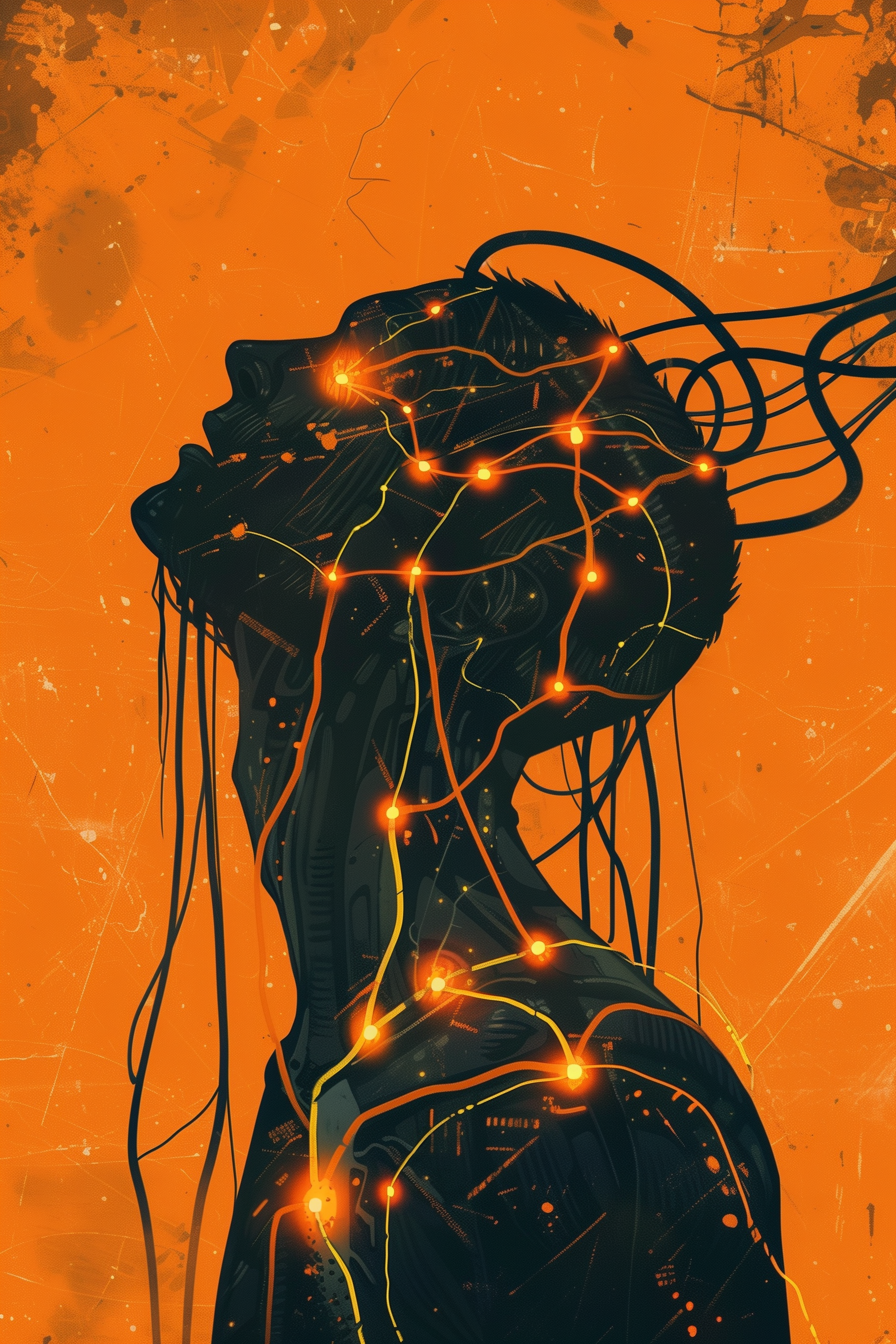
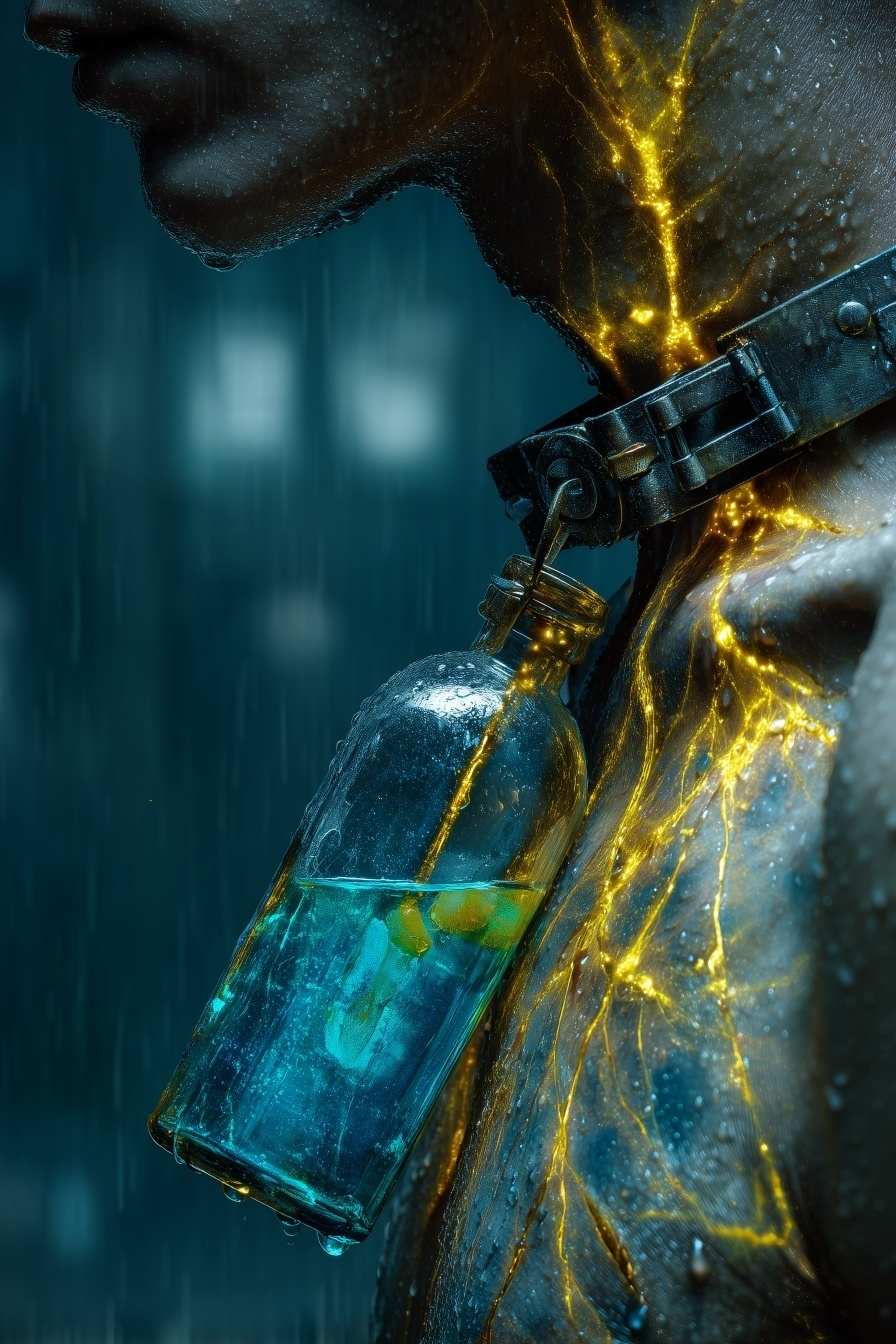
Below you’ll find the book cover and an idea for the back cover using the same aesthetic. After you’ll see some ideas for book covers that I considered before landing on the final design. I like the blue depiction of the Bleeder-Cuffs. I also shared a few other early concepts.
The thing I’m focusing on more and more with book covers is the reality that there needs to be text on the cover, and that should influence the design. This seems almost too obvious to mention, but it’s something I need to integrate into the planning phase rather than sorting through a number of great designs that can’t be used, because the text would muck things up. I like the way the final design turned out.



Revisions
This book took a lot or revising. It was a stressful and often dispiriting process, because I was working so hard on it only to wonder one question: why? I was relieved when it was done, but then upon reading it again, I felt a pang of disgust, thinking it just didn’t work. And it doesn’t work entirely. It probably doesn’t have enough romance or erotic scenes to please the romantasy crowd, and yet has too much of that for the science fiction crowd. It’s an odd duck in many ways.
Balancing all the world-building wasn’t easy. I was trying to create a realistic fantasy world without over-explaining it, and making sure that the A.I. wasn’t making ongoing continuity errors in the plot, let alone in the larger worldbuilding of the fantasy.
But it’s not as bad as I feared, and it’s helped a lot by a strong ending, in my opinion. I’m learning that act 2 is the big challenge in these projects. I’m experiencing it now in book 3 and I’m telling myself to persevere, just as I did with this one. I’ve shared the first three chapters below.
Chapter 1: The Static in the Rain
The lights breathed like something patient and enormous was sleeping under the city.
Jamie had spent enough nights on this rooftop to know that you eventually stopped being able to locate the rhythm. Was it the city or was it you? The city's hum. That’s what people called it in the Human Sector, when they called it anything at all. The hum. As though it were traffic, or weather.
Rain fell in long silver diagonals. It pressed itself against the chrome and the glass and the wet empty corridors of Sector Nine as though it were trying to get a better look at what lived there, which was almost nothing anymore. Sealed storefronts. Empty transit corridors. And from the substation on Varne Street, a low grey humming that had nothing whatsoever to do with machinery, though it had learned to hide inside the sound of it.
She had been assigned to this district for six years. During that time she had stood in variations of this cold, hunting for Glows, doing her job.
Her earpiece clicked.
"Team Two is in position," said Renn, her second on the ground. His voice was flat and tired. "Basement entry's confirmed. Single point of egress, southeast corner."
"Hold," Jamie said.
She raised the scope and looked down at the decommissioned textile warehouse that sat on the edge of the Neutral Zone, its old sign still advertising fabrics that no one wove anymore for people who no longer came. It was dark and apparently empty. But the thermal overlay showed her what the dark couldn't hide: seven distinct heat signatures in the basement level, clustered near the northeast wall. Soft. Diffuse. Almost ambient, like warm stones that had absorbed the day's light and were giving it back slowly in the dark.
Flickers.
"Waste of time," Renn said, his voice crackling through the earpiece. "Seven Flickers in a condemned warehouse. We’re pulling out the full team for this?"
"We pull out the full team for all of them," Jamie said.
A beat of silence. Then: "Copy that."
Low-yield, non-combatant, probably unregistered. The kind of Glows that turned up in squats like this every few weeks. “Hiding,” Renn would say, as though the word were an accusation rather than a description.
Something struck the parapet to her left. A crack of displacement. She listened as something bounced and skidded across the wet surface of the roof. Her body tightened, but she remained still, her scope even. She turned her head in the direction of the sound and saw nothing out of the ordinary. A stone. There were teenagers scattered in the streets. She looked at the parapet and scanned the opposite roofline, carefully moving her eyes along the irregular shapes of light and shadow, looking for any movement. Then she turned back to the operation below.
"Move," she said.
——————————————————
The basement smelled of damp concrete.
There was something warm and faintly sweet in the space, like sunlight caught in fabric. Jamie descended the southeast stairs behind Renn and two junior officers, her tactical coat shedding water, her hand loose at her side, carrying a Static Grenade.
She looked at the thermal and saw them huddled near the far wall. They hadn't moved at all. They hadn't known what was coming, or maybe they did. Seven of them. She counted automatically. Two adult-sized. Five smaller. One of them moved.
Renn's hand went to his holster. "Commander."
"Hold," she said.
One of the adults, a short woman by shape and by the way she moved, appeared to step in front of one of the children. Her hands were open at her sides. She didn't raise them. Her chest held a faint light in the dark basement. It was the vital spark, dim and weary, but present.
"Is it just kids?" Renn said quietly.
"No," Jamie said.
The woman walked slowly into the light and looked at Jamie. Her eyes were the deep color of a lamp burning low. Jamie noted her open hands and her deliberate, careful movements, the way she angled her body in front of the children. Behind her, one of the smaller boys pressed close to her back, his fingers curled into the woman's sleeve.
"We don't want trouble," the woman said. Her voice was steady. "We haven't done anything."
"That's not a determination you get to make," Jamie said, and threw the grenade.
It didn't explode. It exhaled. A soft, pressurized release of ionized particles that moved outward from the canister in a white cloud, silent and fast and total. Within three seconds every Glow in the room had gone the same color: a dull, bruised grey. The woman's chest went dark. The smallest one made a sound and then went quiet as the dampening settled.
"Move in," Jamie said. "Cuffs on all of them. Don't separate the small ones from the adults until we've got full containment."
The junior officers moved. Renn pulled the restraint kit. The room became procedural, all angles and efficiency, the mechanics of extraction indistinguishable from any other kind of loading.
Jamie walked the perimeter. She checked exits and corners, doing what she always did in the first ninety seconds after a Static deployment. She noticed everything. The mattresses on the floor. The small arrangement near the northeast wall, smooth stones in a line, what might have been a candle burned to nothing, the careful evidence of people making a place into something.
Behind her she heard the magnets lock. The sound a Bleeder-Cuff made when it sealed was a low, industrial click that she had heard hundreds of times. She had long since stopped watching the soft, involuntary collapse that followed, the way a body that had been lit went unlit.
"Commander."
It was Renn. She turned. He was holding up the cuffed Glow, one of the adults, a young man, barely more than a boy, his face now the grey of dampened light. But his eyes were still tracking her.
The vial on his cuff glowed neon blue. Already. Even from this yield, even from this flicker of a person, the vial filled with cold clean light that bore no resemblance to what it had come from. She looked at it for exactly as long as it took to confirm the seal, and then she looked away.
"The others?" she said.
"Already on it." Renn glanced at the young man, then back at her. "What do we do with the little ones? They're not going to yield much."
"They go to the processing center with the rest. Standard intake." She moved to the next cuff. "Don't leave anything unregistered."
"Yes, Commander." He paused. "Seems like a lot of paperwork for a bunch of Flickers."
"Then do it efficiently," she said, and Renn went quiet.
——————————————————
"He said his name."
Jamie turned to find Edmund Webb leaning against the far wall, watching. He had arrived sometime during the sweep. She had noted his presence without acknowledging it, which was the arrangement they had settled into without discussing it. His coat was dry. He had not come down until the grenade had gone off.
He was a tall man. His face was pleasant, symmetrical, considered, built to be looked at. He watched Jamie work with an attention he never bothered to disguise. I am allowed to look. You are worth looking at. She had been receiving that message for three years.
"One of them said his name," he said, nodding toward the group now being processed against the wall. "Lyric or something."
"Liren," said the young man in the cuffs, without moving, without raising his voice, without anything except the bare, stubborn fact of the correction.
One of the junior officers stepped toward him. Jamie said, "Leave it," without looking at either of them, and the officer stopped. Edmund tilted his head at the young man with amusement.
"Liren," he repeated. "There it is. Give them an inch." He pushed off the wall and moved toward the row of cuffed Glows with the casual ease of a man touring a facility he owns. "You know what the problem is, Vyne? Every generation of officers we get, somebody gets soft. They start thinking the names matter."
"The names don't change the yield," Jamie said.
"No," Edmund agreed. "But they change the officer." He stopped in front of the young man and looked at him. "That's why we have the numbers. The number is honest. The name is a request. It's asking you to see something that isn't there."
Liren looked straight ahead. The vial on his cuff had filled to the halfway mark and his skin had a grey, exhausted look, but his jaw was set and his eyes were fixed on some unseeable world that had nothing to do with Edmund Webb.
Jamie moved to the wall where the cuffed Glows were being lined up for transport. Edmund fell into step beside her. He was looking at the row of vials now, each one glowing blue with its extracted yield.
"That little scrap," he said, nodding at the fullest vial, "is enough to keep a hospital wing running for a week." A pause. The pause of a man who enjoys the sound of his own observations. "And yet they act like we're the ones taking something."
Jamie said nothing. She was checking the seal on the second cuff. It was tight. She moved to the third. She could feel Edmund watching her.
"You know," he said, conversational, "there's a review coming up. Sector Eight commander is being reassigned. I've been talking to people." Another pause. "Your name has come up."
"I know," Jamie said.
"You're not curious about what I've been saying?"
"I trust you'll tell me what's useful." She checked the last cuff. "Clean," she said, to no one in particular.
Edmund smiled at the side of her face. She didn't see it, but she felt it.
"Efficient as ever, Commander," he said. "I'll see you at the debrief."
His footsteps crossed the basement and ascended the stairs, and then he was gone and the room was just a room again full of procedural sounds, the shuffle of transport prep, and the thin residual hiss of the Static grenade's dissipation.
"Debrief's at oh-six-hundred," Renn called from across the room.
"I know," she said.
——————————————————
She was on her way out when she kicked over the mattress.
It was a standard procedure, a sweep check looking for concealed materials. What she found made her crouch without thinking. A full garment, folded flat against the floor. Dark and still. And beside it, a smaller piece, a torn scrap, no larger than her palm, ragged at one edge.
She lifted the smaller piece first and held her flashlight over it. Where her flashlight beam crossed it, the light didn't reflect or refract or do any of the things light was supposed to do. It simply ceased. The fabric ate it, without appetite or drama, the way a still surface of water absorbs a stone and closes over it.
Void-Silk.
She set the scrap down and examined the larger piece without unfolding it. The same quality. A Veil garment, full body, intact. She stood and looked at both pieces for a moment. Then she flagged her earpiece.
"Renn. I've got a Void-Silk find, northwest corner, under the mattress. Log it and bag it for processing."
"Copy that," Renn said.
She crouched again, picked up the small torn scrap, and turned it over once more in her hands. Then she folded it and placed it in the interior pocket of her coat, where it sat without weight or warmth, taking up almost no space at all.
She stood and walked out.
The rain had continued to fall. It never seemed to stop. In the distance, down Varne Street, the substation walls hummed their four-second rhythm and the lights throbbed with it. The static from the cuffs still tingled in her fingertips. She turned and walked toward the Neutral Zone.
Chapter 2: The Pruning of Jamie Vyne
The staircase was iron and narrow.
Edmund Webb had made the climb deliberately inconvenient, which Jamie had understood the first time she'd made it three years ago and understood even better now. By the time you reached the top, you had left the city behind. Your legs had carried you out of it and your lungs had done the work.
The ozone-smell of the street fell away below her, replaced by the rich, loamy scent of wet earth, and geosmin rising from soil that had no business existing fourteen stories above Sector Nine. She had looked up the compound once, in the early days of these summons, when she was new to the job and new to the diplomacy that these meetings required. Geosmin. Produced by healthy soil bacteria. The smell that humans had evolved to associate with rain, with growth, with the trustworthy earth replenishing itself. He had engineered it.
The rooftop was deliberately composed. Sunflowers stood along the eastern parapet in a row, their heads bowed slightly in the rain, enormous and yellow and improbable against the grey sky. Between them, raised beds of dark earth held the disciplined geometry of a kitchen garden. There were tomatoes staked and tied, and herbs in rows. There was a climbing trellis set against the southern wall where ivy had been coaxed into patterns that looked almost natural until you noticed that nothing here was accidental.
Rainwater collectors stood at each corner of the roof. Polished steel caught what fell from the sky and held it. No Grid water. No processed municipal supply. Edmund Webb sustained his garden on what came directly from the clouds, which he had mentioned to her once with satisfaction.
He stood at the trellis and didn't turn when she arrived. He was examining a section of ivy, holding a pair of antique, iron-handled shears in his right hand. He found what he was looking for: a yellowing leaf at the end of a stray vine that had grown beyond the trellis's edge, reaching for something the trellis hadn't accounted for.
He snipped it.
"Structure is kindness, Jamie," he said. "Without the shears, the most beautiful things eventually choke themselves out."
"Good morning," she said.
He turned then and smiled. The smile was the thing about Edmund Webb that she had spent three years learning to respond to. It was a genuine smile. That was the difficulty. There was real warmth in it, real pleasure at her presence, and she had long ago stopped trying to reconcile that warmth with what she understood about him.
"You did well last night," he said, moving along the trellis, the shears open and closed in a small, rhythmic motion at his side. "Seven Flickers from the Varne Street squat. Renn's report came through at oh-four-hundred."
"Standard extraction," Jamie said.
"No such thing." He glanced at her sideways, approving. "There's always the potential for deviation. The fact that there wasn't is the achievement, not the result." He paused at another section of the trellis and studied it with the same focused attention. "One of them gave his name?"
"Liren," she said. "I logged it."
"Mmm." A pause that contained a judgment she wasn't given directly. "And it affected nothing."
It wasn't a question. She answered it anyway. "No."
"Good." He snipped a second yellowing leaf and let it fall to the rooftop without watching it land. "Names are — and I want you to understand this as the operational principle it is, not as sentiment — names are the first weapon of the compromised. They make you locate something individual where your job requires you to see only the aggregate. One named thing becomes a person. A person becomes a problem." He looked at her fully now. "You understand this."
"Yes," Jamie said.
"I know you do." The warmth again, uncomplicated, offered freely. "That's why we're having this conversation instead of a different one."
She waited.
He crossed the rooftop to one of the raised beds and crouched with the ease of a man who did physical work regularly and deliberately. When he stood again he was holding a tomato, deep red, perfectly formed. He held it out to her.
"Heirloom," he said. "Cherokee Purple. Grown from seeds that predate the Grid by a hundred and forty years." A beat. "Pure sunlight. Rainwater. Nothing processed."
She took it. It was warm from whatever sun had reached it through the clouds, which was not much sun, but Edmund Webb's garden grew what he intended it to grow. She bit into it over the raised bed, and it was very good. Sweet and complex and slightly acidic, the taste of something that had been given time to become itself.
She swallowed. Edmund watched the column of her throat.
"There was something else," he said. His voice had not changed. It was still relaxed, still warm. "Something I wanted to mention, as a courtesy." He reached into an evidence bag at his feet and pulled out the Void-Silk found beneath the mattress.
"We found this in the building," he said. "Near your processing area."
She looked at it. She let herself look at it for exactly the right amount of time, long enough to examine it, short enough to signal that it required no particular examination. "Void-Silk," she said. "We logged it."
"You did," Edmund said. "I checked." He turned the garment over in his hand, watching it eat the grey morning light the way it ate everything. "It's an interesting material. The report said it was found under one of the mattresses. An unsurprising location, I suppose." He looked up at her. "That's where you found it?"
"Standard sweep," Jamie said. "Southeast corner of the structure, mattress concealment. It's in the report."
"It is." He set the garment back in the evidence bag. The shears opened and closed again, once, at his side. "Void-Silk has very limited legitimate applications, of course. It's a Veil material, primarily. You know the Veil."
"I know of it," she said.
"Of course." The smile returned, brief and tidy, like a door opening and closing. "I only mention it because we're entering a period of heightened sensitivity. The Commissioner's office is very interested in the Neutral Zone infrastructure right now. The Veil in particular." He moved back toward the trellis. "If anything were to surface suggesting an officer had a relationship with that environment, it would be complicated. For that officer. Regardless of their record."
The rain came down between them, steady and indifferent.
"I'll keep that in mind," Jamie said.
Edmund nodded, already turning back to his ivy, already finding another stray vine that had exceeded the boundary of its trellis. "I know you will." He raised the shears. "You always do. That's what makes you exceptional, Jamie."
The blade caught the grey light and closed.
"Sector Eight command is yours if you want it. My recommendation goes in at the end of the month." He didn't look at her. "I just need to know there's nothing growing where it shouldn't be."
She looked at the sunflowers. They were very still in the rain. Their heads were bowed under the weight of the water, but their roots, she understood, went down through the soil he had built up here from nothing, and they held.
"There isn't," she said.
——————————————————
She descended the iron staircase alone.
By the time she reached the street, the smell of geosmin was gone and the ozone was back. The lights throbbed their four-second rhythm and the city was exactly what it had been before their meeting.
Chapter 3: The Heart of the Grid
The Processing Center occupied the sub-basement of Task Force Central, three levels below street grade, where the hum of the Grid was loudest and the Ruin-Stone in the walls was thickest.
The fluorescent lighting was calibrated to a frequency that the engineers had determined was least comfortable for Glow biology, a cold white that flattened everything it touched and cast no shadows. Shadows were where things hid. The Processing Center had been designed by people who believed that visibility was the same as control, which Jamie had long understood was not true.
She descended the staircase now with her tablet under her arm and her coat still damp from the rain. The desk officer, a man named Pell, whose function was to exist at the intake counter and process the paperwork that Jamie and her team generated, looked up when she came through the security door.
"Morning yields from the Varne Street extraction," she said, setting the tablet on his counter.
"Already logged," Pell said, without particular feeling. "Seven units, Civic Processing track. Standard intake bleed completed at oh-three-hundred." He pulled up the record and turned the screen toward her. "When you sign off on the yield totals, they’ll be assigned to Supervised Residency."
She looked at the numbers. The yield column showed seven entries, each one a decimal figure representing the energy extracted from a living being in the early hours of the morning and converted, through the Bleeder-Cuffs' collection mechanism, into a standardized unit of Grid power. The numbers were small, but the column at the far right showed the aggregate. The aggregate was respectable and that was what the quota system measured.
She signed.
"Residency assignments," she said. "Where are they going?"
Pell glanced at the screen. "Block Fourteen, Civic Residency Zone. Standard supervised." He paused. "They get a reporting date. First bleed assessment in thirty days."
"Fine," she said.
She was already moving toward the inner corridor when she saw him.
He was sitting on the processing bench that ran along the near wall, the bench where extracted units waited for their residency paperwork, sitting in the flat white light with his hands in his lap, which was where you put your hands when you were wearing Bleeder-Cuffs and the magnets were active and the vials on your wrists were full of what had been inside you an hour ago. He had his head slightly bowed. His skin was still the grey of a Static-dampened Glow, not yet recovered to whatever warmth it had been before, and the light in his chest was barely visible now. A pilot light. The minimum.
Liren.
She remembered the name. She looked at him for a moment, and he raised his head and looked back at her. His eyes, like the Glow woman's in the basement, did not look away. They burned like quiet fires. Whatever the Bleeder-Cuffs had taken, they had not taken that.
She looked away and then walked the inner corridor.
——————————————————
The high-security monitoring suite was at the corridor's end, behind a secondary Ruin-Stone door that required her Commander's clearance to open.
She came here perhaps once a month, as part of the Task Force's standard oversight protocol for Class-10 assets, which required a senior officer's logged review. It was paperwork, essentially. A box to check. She had never spent more than four minutes in the monitoring suite.
She pressed her palm to the reader and the door opened.
The room was small and very cold and dominated, on its far wall, by a bank of monitors showing the interior of the Core from multiple angles. Thermal. Visible spectrum. Electromagnetic frequency mapping. Most of the screens showed variations of the same thing: a chamber of lead-lined chrome, featureless, lit from no visible source, with a figure at its center that the cameras struggled to fully render.
The screens kept adjusting. Auto-calibrating, compensating, trying to resolve the image into something the equipment could process. They couldn't quite manage it. The light coming off the figure was too consistent, too high-frequency, too much for the cameras' dynamic range. What they captured instead was a silhouette. The shape of a man, broad-shouldered, standing, rendered in a white so intense it was nearly colorless, the edges of him bleeding into the surrounding air.
Unit 730-Alpha-09.
He was standing at the transparent Ruin-Stone panel that separated his chamber from the monitoring corridor on the other side. His hands were pressed flat against it, and even through the cameras, even through the electromagnetic dampening and the three levels of Ruin-Stone walls between him and the surface, you could see that the glass was warm where he touched it. The thermal cameras showed it clearly. Two handprints glowing amber against the cold grey panel, like something trying to get through.
Jamie stood in front of the monitors and looked at him.
The official record said Unit 730-Alpha-09 had been in Core containment for eleven years. The file said Class-10 Power Asset, Pulse-type, high-yield sustained output. His output powered the Core district, which was the wealthiest residential zone in the Human Sector, the towers where the Purist elite maintained their apartments and their rooftop gardens and their heirloom tomatoes. It ran entirely on his yield. The numbers in his file were not numbers she could make meaningful. They were too large. They referred to something she didn't have a unit for.
The silhouette shifted. One hand lifted from the glass and then pressed back, slowly, as though testing a surface he had tested ten thousand times before and had not yet stopped testing.
She thought about the Book of Radiance. She had read it in fragments, in the privacy of her apartment, in the hour before dawn when she couldn't sleep and the plant on her windowsill was the only other living thing in the room. She thought about it now, without meaning to.
They only hold a star by its tail.
"Commander Vyne."
She turned. The duty tech stationed at the monitoring console looked at her with the careful neutrality of someone who had learned not to ask questions about what senior officers did in the monitoring suite. "Anything you need pulled for the log?"
"Containment status," she said. "Standard review."
"All nominal," he said. "Output steady at…" He read the number. It was the kind of number that belonged in a physics equation, not a personnel file. "Bleed schedule maintained. Tuesdays and Fridays, oh-six-hundred. No anomalies in the current cycle."
She looked at the monitors. "He's been in there eleven years?" she said.
"Yes, Commander." The tech pulled up the asset management screen. "Full confinement for the first four. But then his output degraded considerably, eighteen percent below intake baseline by month twenty. Engineering flagged it." He scrolled. "That's when they implemented the enhanced compliance program. Tiered management. It recovered the yield within the first quarter."
Jamie watched the handprints glow amber on the thermal feed. "How does the tiered management work?" she said.
"Standard confinement is Tier One. That’s all here in the Core. The bleed schedule and the dampening field. That's the baseline." He gestured at the screen. "Tier Two is supervised excursions, compliance visits at a local diner. Twice weekly, currently. He’s given Neutral Zone access, four-block perimeter, thirty minutes unaccompanied. There are handlers present for transport and return. We have Commission cameras installed at the venue to monitor him." He paused. "The diner they meet at is called The Amber Standard. Do you know it?”
She shook her head.
He shrugged and continued. “It’s a low-yield environment, low risk. Our engineering department found that supervised outside contact reduced a lot of internal pressure accumulation. And there wasn’t any meaningful security exposure, at least not yet."
"And Tier Three?" she said.
The tech looked at her with mild surprise. Not many senior officers were curious enough to ask follow-up questions on tiered containment. "Unsupervised night release. Twice weekly, currently. Thursdays and Sundays. The asset is released into the Neutral Zone for a four-hour window with the compliance bracelet active." He pulled up the bracelet's specification screen. "On Tier Three nights, the bracelet is reconfigured to output monitoring only. Location tracking is suspended."
She looked at him. “Why do it that way? What prevents escape?”
"Engineering's determination," he said, with the careful tone of someone citing a decision above his pay grade. "Full monitoring on the release nights defeated the purpose. Output benefit was negligible." He scrolled to the yield comparison graph. "When we suspended the location-tracking then his output recovered an additional eleven percent above the Tier Two baseline. The program has been running for three years. The numbers support it. We should probably give him more free nights, if you ask me."
She looked at the graph and then at him. “Does anyone ask you?”
His face went still. “No, Commander.” After a pause, he continued: “But I’m happy to do my job and play my role.”
She nodded. “Of course. You said an eleven percent increase, sustained across three years?” She was watching the large figure on the monitor again, his hands glowing on the glass. “That represents an enormous yield.”
“It does,” he said, smiling again.
"The bracelet tracks what, exactly, on those nights?" she said.
"Output levels. Return compliance. He's back in the Core by the end of the four-hour window, every time, without exception." The tech almost sounded admiring. "Engineering considers it the program's proof of concept. Give the asset a genuine release window and it self-manages. Output stays within acceptable parameters during the window, spikes cleanly on the return to confinement, stabilizes by the following morning." He closed the specification screen. "He's never exceeded the window. Never tested the boundary."
She looked at the monitors. The silhouette at the glass. The handprints.
Never tested the boundary.
"Fine," she said. "Log the review."
She looked at the monitors one more time. The silhouette stood at the glass. The handprints glowed amber on the thermal feed. The cameras kept trying to resolve him and kept failing. In the gap between what the cameras expected and what they found, the figure simply burned, patient and enormous and utterly contained.
The Void-Silk was in her pocket. She could feel it against the lining of her coat, the place where her fingertips went still and the static stopped.
She walked the corridor and climbed the stairs. She signed two more requisition forms at the desk and said nothing to Pell, nothing to anyone, and pushed through the security door into the rain. She had a shift in eight hours.